
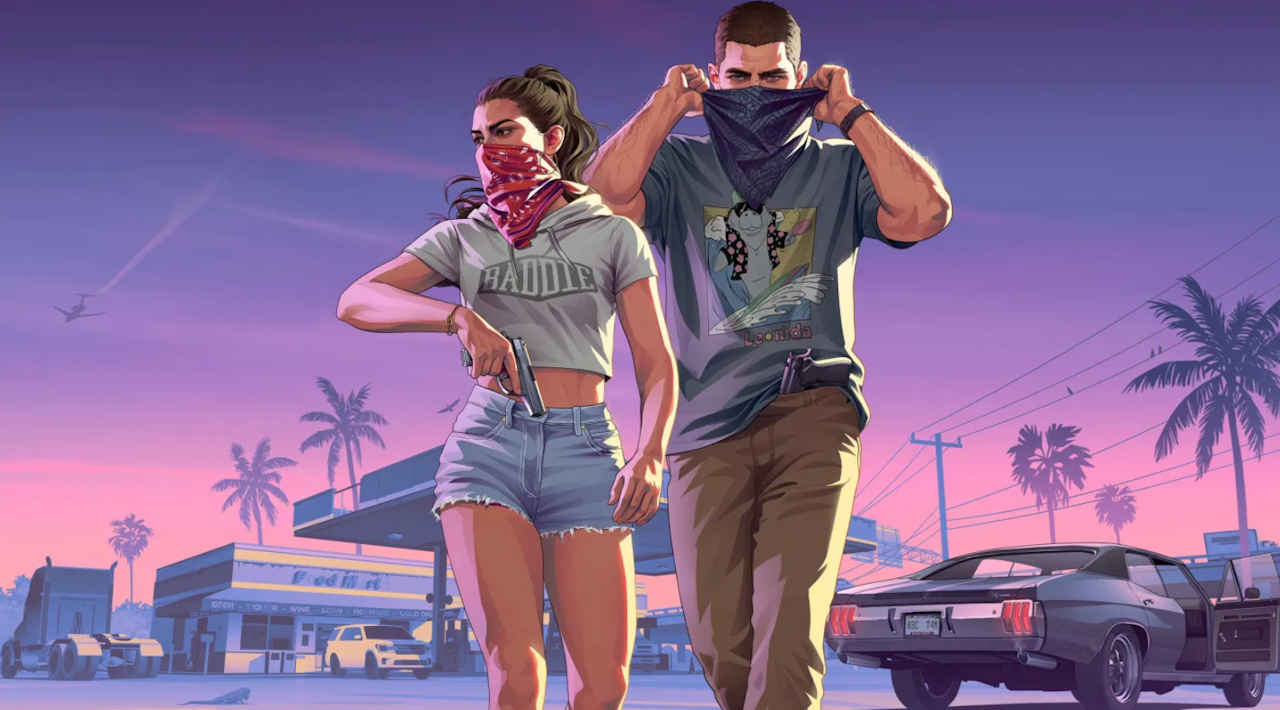
Grand Theft Auto VI launches after more than a decade with a confirmed November 19, 2026 release on PlayStation 5 and Xbox Series X|S, but the available launch materials still leave one major platform unlisted: PC. The timing matters because Grand Theft Auto V arrived in 2013 and went on to sell nearly 235 million units worldwide, turning the sequel into both a cultural event and a major financial marker for Take-Two Interactive.
Prelaunch demand is already measurable: YouTube described the first trailer as its biggest 24-hour debut for a non-music video, while the second trailer reportedly drew more than 475 million views across platforms in a day. The confirmed details point to a tightly controlled console rollout, a large music push, and a release whose business implications extend beyond launch-week sales.
What Rockstar says about the 2026 release
Rockstar’s announced plan is precise on timing and console hardware: Grand Theft Auto VI has an initial release date of November 19, 2026, and the confirmed platform list contains three consoles at launch. A Take-Two Interactive / SEC filing lists the game for November 19, 2026, on PlayStation 5 and Xbox Series X|S, with no PC date listed.
The game is developed and published by Rockstar Games, identified corporately as Rockstar Games, Inc. That matters for the release framing because the same company is responsible for both production and publishing, rather than separating creative development from a different external publisher. The available launch information therefore comes through the Rockstar and Take-Two corporate structure rather than from platform-holder announcements alone.
Platform availability is confirmed for PlayStation 5, Xbox Series X, and Xbox Series S. This gives the release a clear current-generation console focus, while leaving other versions outside the confirmed launch plan. The key practical takeaway is narrow but firm: the date is set, the publisher and developer are named, and the initial platform list is limited to Sony and Microsoft’s current console families.
Why this sequel matters after Grand Theft Auto V
Few sequels arrive carrying the commercial shadow of a predecessor that had sold nearly 235 million units worldwide by 2026, according to Take-Two Interactive earnings materials. That scale helps explain why the new installment is being treated as more than a routine sequel: it is entering after a title that continued to shape sales, online spending, and audience expectations for well over a decade.
Grand Theft Auto VI is the eighth main entry in the series, and it follows 2013’s Grand Theft Auto V. It is also the sixteenth entry overall, a numbering distinction that matters because the franchise includes major numbered releases alongside expansions, handheld titles, and other related installments. The long interval between mainline entries has made the sequel a focal point for both players and the wider games business, rather than only the next release in an established catalogue.
The gap has also intensified comparison. The Associated Press reported that the new game follows a 13-year wait since the previous main entry arrived, while Take-Two’s SEC Form 10-Q stated that Grand Theft Auto products generated 12.6% of the company’s net revenue in the six months ended September 30, 2026. Those figures show that the series has remained commercially active during the wait, which raises expectations for the follow-up because it is being measured against a predecessor that did not quickly fade from the market.
Prelaunch attention points in the same direction. YouTube said the first trailer was the platform’s biggest 24-hour debut for a non-music video, with related videos drawing more than 250 million views around the launch window.
AP later reported, citing Take-Two, that the second trailer generated more than 475 million views across platforms in 24 hours. These numbers do not indicate quality, but they do show why the sequel is framed as a major industry event before release.
Development details, recognition, and music credits
A pre-release win in an anticipation category gives the game an awards footprint before critics can assess the finished work. The listed recognition includes The Game Award for Most Anticipated Game, a category that measures expectation and industry attention rather than completed-game achievement. That distinction matters because the award confirms unusually high visibility before release, but it does not substitute for later assessments of design, performance, narrative, or player reception.
Its recognition record also includes nominations for The Game Award for Game of the Year. That category is normally treated as one of the most visible honors in commercial game awards coverage, so the nomination listing places the title within a high-profile awards framework. The listing should still be read carefully: a nomination signals institutional recognition, while the final critical and commercial picture depends on post-release reviews, technical performance, and audience response.
The verified music credit names Justice as composer, giving the project a clearly identified original-score attribution before launch. Associated Press reported that GTA VI: Original Score by Justice is a separate 30-track release scheduled for December 11, 2026. Taken together, the composer credit and score release show that the game’s pre-release profile extends beyond platform and date information into formal music production details, without requiring unsupported claims about the wider soundtrack or cast.
What the confirmed details do and do not tell us
The most useful reading of the confirmed record is that it is narrower than the surrounding conversation: it establishes the release framework, not the shape of the game itself. The supplied notes confirm a 2026 action-adventure release from Rockstar Games, and they state that the game uses a proprietary license. Those facts are enough to classify the title, identify its commercial owner, and separate official publication details from commentary built around anticipation.
Confirmed platform and release information can frame availability, but it does not verify design scope. The available materials do not establish mission structure, map boundaries, narrative turns, character progression systems, technical modes, or the format of any online component. In practical terms, absence of confirmation should not be treated as evidence that a feature is present, absent, delayed, or redesigned.
Speculation around a major sequel often fills gaps left by limited official disclosures, but that material belongs in a different category from sourced facts. Trailer interpretation, retail listings, social media claims, and unattributed leaks may influence expectations, yet they do not carry the same weight as publisher materials, platform documentation, regulatory filings, or named reporting. A clear distinction matters because unverified claims can easily harden into assumed features before the final product is available.
The confirmed record therefore supports a restrained conclusion. The launch is established as a major console-era release with known ownership and licensing status, while the central questions about design ambition, content scale, performance targets, and post-launch support remain unanswered by the supplied evidence. Until those areas are addressed through official materials or reliable reporting, they should be treated as open questions rather than settled facts.
Why the platform gap still matters
The clearest signal from the confirmed material is not just the release date, but the degree of control around it. A midnight local-time PS5 unlock, console-specific launch listings, and no PC date create a defined first phase rather than a fully mapped release cycle. That matters for players, retailers, creators, and Take-Two’s reporting calendar, because attention will not end on November 19, 2026.
It will shift toward performance, platform expansion, recurring spending, and how Rockstar supports a title following one of the most commercially durable games ever released. The absence of a PC date is not a minor footnote; it is the next major information gap.
Frequently Asked Questions
Q: When is Grand Theft Auto VI scheduled to release?
A: The game is scheduled to launch on November 19, 2026. That date places it more than a decade after Grand Theft Auto V, which is one reason the release has drawn unusually strong attention.
Q: Which platforms will Grand Theft Auto VI be available on at launch?
A: The initial release is set for PlayStation 5, Xbox Series X, and Xbox Series S. No other launch platforms are listed in the supplied release details, so availability elsewhere is not confirmed here.
Q: Who is developing Grand Theft Auto VI?
A: Rockstar Games and Rockstar Games, Inc. are listed as the developers, and Rockstar Games is also the publisher. That combination suggests the project remains under the same studio structure associated with the mainline series.
Q: Is Grand Theft Auto VI the next main game after GTA V?
A: Yes. It is described as the eighth main entry in the Grand Theft Auto series and the follow-up to 2013’s Grand Theft Auto V. It is also the sixteenth entry overall, which reflects the size of the wider franchise.
Q: Has Grand Theft Auto VI received any awards or nominations before release?
A: Yes. It received The Game Award for Most Anticipated Game and was also nominated for Game of the Year. Pre-release recognition of this kind usually signals strong industry interest, even before final reviews are possible.